Clinical Somatics
Pain relief that works with your nervous system, not against it
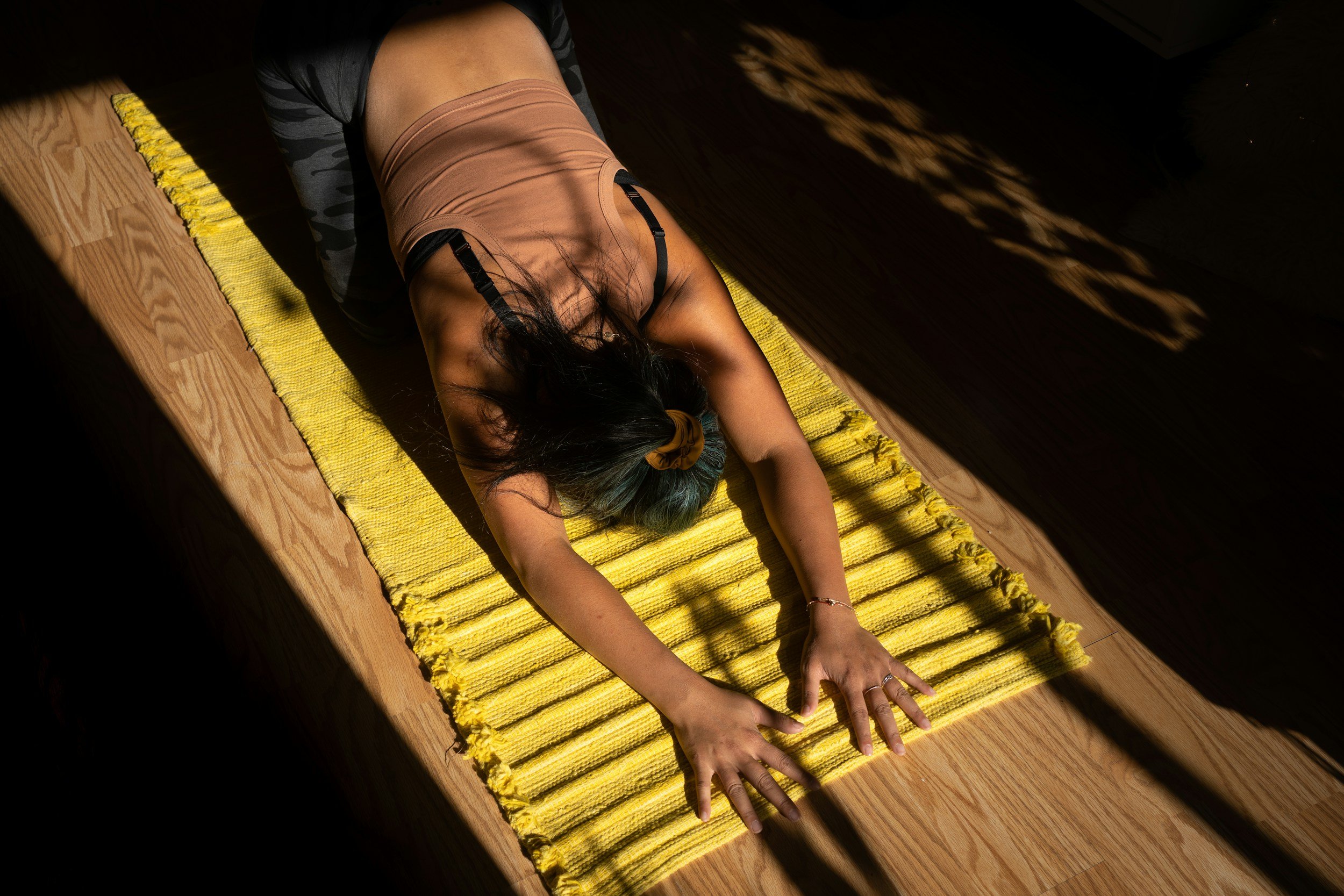
Most chronic muscle and joint pain isn’t caused by injury or damage.
It’s caused by learned patterns.
We repeat the same movements and postures day after day. Sitting. Standing. Bracing. Holding ourselves together through stress. Over time, these patterns become hard-wired into the nervous system.
Your brain decides certain muscles should stay slightly switched on, all the time, to keep you “efficient”.
Helpful at first. Problematic later.
The result is often:
Chronic tightness
Loss of voluntary control
Reduced sensation
Pain that doesn’t shift, no matter how much you stretch or strengthen
This is what people often describe as “muscle memory”. In Clinical Somatics, we work directly with the nervous system learning behind it.
What is Clinical Somatic Education?
Clinical Somatic Education is a gentle, intelligent form of movement re-education that helps the nervous system let go of chronic muscle tension.
Rather than forcing muscles to stretch or relax, we teach our brains how to release tension from the inside out.
The goal isn’t to “fix” your body.
It’s to help you regain conscious control, ease, and sensory awareness.
Over time, this can improve:
Chronic back, neck, shoulder, and hip pain
Posture and movement efficiency
Coordination and balance
Your ability to notice and release tension before it becomes pain
Clinical Somatics is fundamentally self-care. You learn how your body works and how to work with it, so you are no longer dependent on constant treatments or quick fixes.
The key difference: pandiculation
What makes Clinical Somatics different from other movement approaches is the use of pandiculation.
Pandiculation is something your nervous system already knows how to do.
You see it when:
A dog stretches after a nap
A cat arches its back
A baby stretches their arms and legs on waking
That slow, luxurious stretch and release isn’t random. It’s the nervous system resetting muscle tension and restoring awareness.
Humans are born with this ability. But over time, stress, habit, and learned posture can override it. Muscles stay switched on. Sensation fades. Control is lost.
Pandiculation brings that reset back online.
Voluntary pandiculation: teaching the nervous system to let go
In Clinical Somatics, pandiculation is done voluntarily and consciously, not reflexively.
You gently:
Contract a muscle on purpose
Slowly release it with full awareness
Allow the nervous system to recalibrate how much effort is actually needed
This process helps reset the feedback loop between the brain and the muscles, reducing unnecessary tension and restoring voluntary control.
Because this is active learning, not passive treatment, the changes tend to last.
No forcing.
No pushing through pain.
No “stretch harder”.
Just precise, slow, intelligent movement.
Why stretching often doesn’t help (and can make things worse)
Stretching feels logical. Tight muscle? Pull it longer.
But the nervous system doesn’t see it that way.
When you stretch a muscle that’s already tight, your stretch reflex kicks in. This is a protective response designed to stop muscles from tearing.
Your brain pulls one way.
Your nervous system pulls back the other.
The result is often:
Temporary relief at best
Rebound tightness shortly after
Or pain that slowly gets worse over time
Stretching doesn’t change the resting level of muscle tension set by the nervous system. Clinical Somatics does.
Hands-on and self-practice
In sessions, pandiculation can be guided hands-on, with gentle resistance provided by the practitioner.
You’ll also learn simple self-care movements you can do at home. These use gravity as resistance and help you stay connected to your body between sessions.
The aim is not dependency.
The aim is confidence and autonomy.
This work is for you if:
You’ve tried stretching, strengthening, massage, or physio with limited results
Your pain feels habitual rather than injury-based
You notice you hold tension without realising it
You want long-term change, not temporary relief
Clinical Somatics is subtle work. But it’s deeply effective.
It teaches your nervous system something it’s forgotten: how to let go.